Why Most YouTube Analytics Are Useless
Are you tracking the right YouTube analytics? Stop obsessing over vanity metrics like raw views and learn to use CTR and retention to engineer real channel growth.
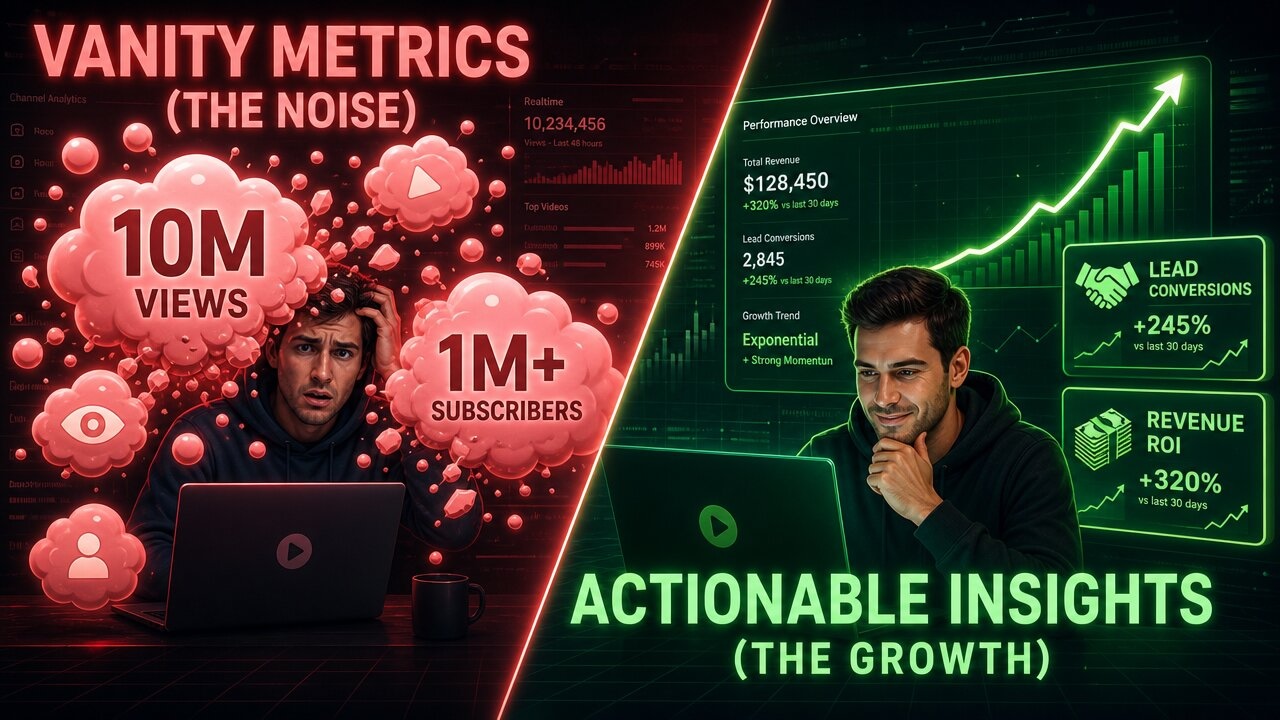
We have all been there. You upload a new YouTube video, hit publish, and spend the next 48 hours constantly refreshing your creator dashboard. You watch the view count climb. You see a spike in likes. You gain a few subscribers. It feels incredible—the dopamine hits are entirely real. But here is the hard truth: most of the numbers you are obsessing over are practically useless for long-term growth.
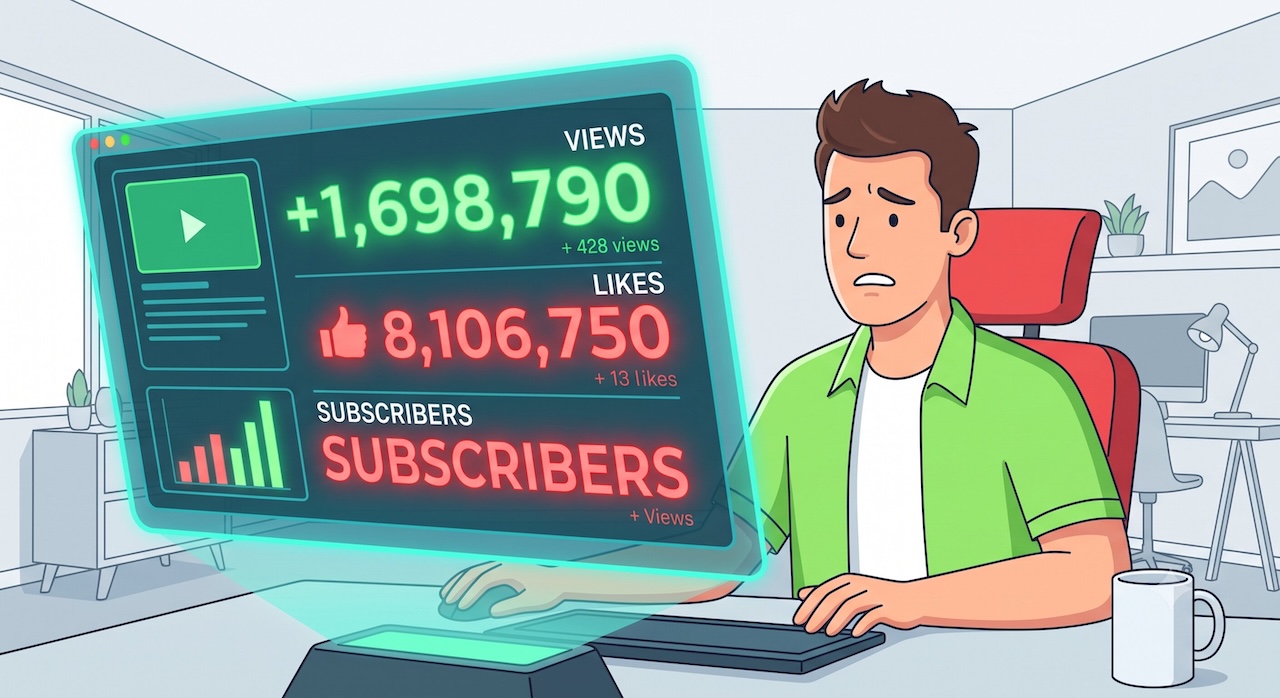 Dopamine Trap: It is easy to get caught up obsessively refreshing your dashboard.
In the world of YouTube analytics, there is a massive divide between what makes you feel good and what actually moves the needle. This divide is the difference between "vanity metrics" and "actionable metrics". If your goal is to build a sustainable, engaged audience, generate real revenue, or drive business leads, relying on the wrong data will steer your content strategy right off a cliff.
Here is exactly why most YouTube analytics are deceiving you, how to spot the traps, and the specific numbers you should be tracking instead.
The Trap of Vanity Metrics
Vanity metrics are surface-level data points that look highly impressive on a dashboard but lack the depth required to drive meaningful business or creative decisions. They tell you what happened in a broad, passive sense, but they completely fail to tell you why it happened or what you should do next.
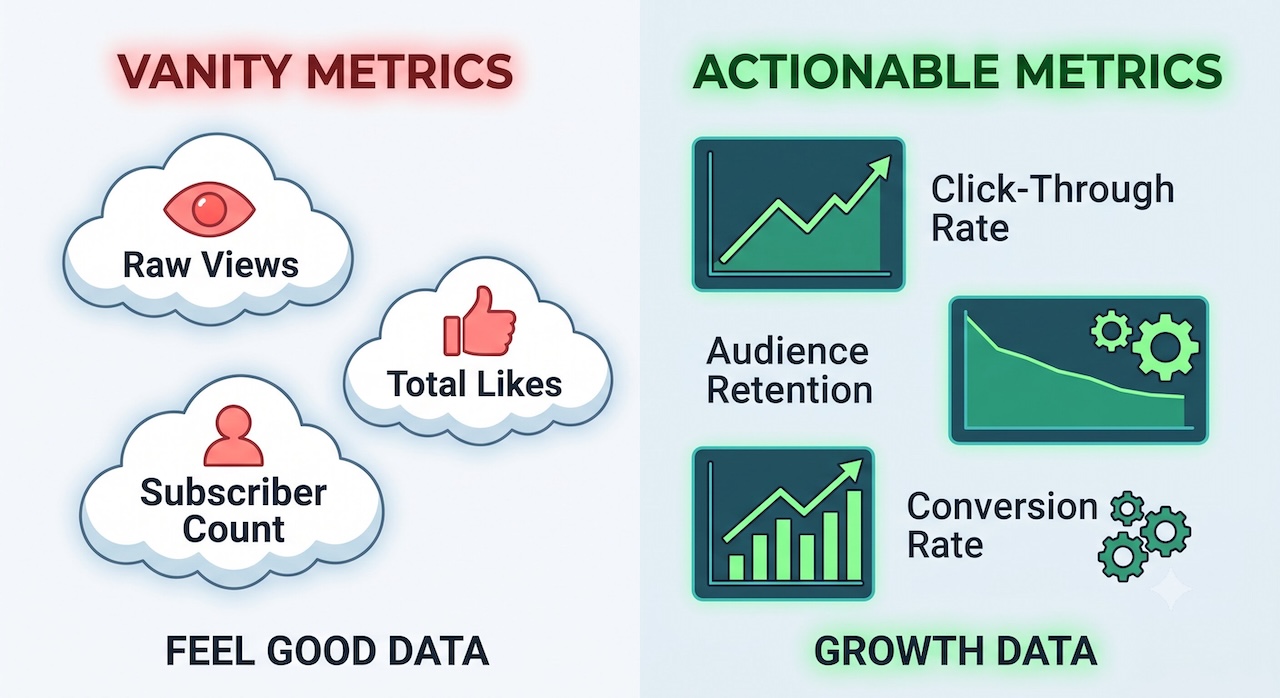 Vanity vs. Actionable Data: Focusing on structured business data rather than surface-level numbers.
On YouTube, the classic vanity metrics include:
- Raw View Count: A view is counted very early in a video's runtime. It does not tell you if the viewer stayed for the entire video, or if they clicked away after three seconds because your intro was too long.
- Subscriber Count: While a high subscriber count builds social proof, it guarantees absolutely nothing about future engagement. Many massive channels have millions of "dead" subscribers who no longer watch their daily uploads.
- Total Impressions: Impressions simply mean your thumbnail appeared on someone's screen as they scrolled. It does not mean they stopped, clicked, or cared about your brand.
The danger of vanity metrics is that they exploit well-documented cognitive biases. Large, round numbers are incredibly easy for our brains to process, and they create a false feeling of progress. Because they are easy to measure and highly visible, they are often used as "proof" of success, even when they do not correlate to actual growth or revenue.
Why the Creator Dashboard Misleads You
When you open YouTube Studio, the platform naturally highlights metrics that encourage you to stay on the content treadmill. This creates the "view illusion." Because views and follower counts are so easily communicable, creators naturally use them as the ultimate anchor for success.
However, prioritizing raw volume conflates mere attention with actual value. For example, a video that gets 100,000 views from a viral trend but results in zero sales is mathematically less valuable to a business than a hyper-targeted tutorial that gets 500 views but generates 10 high-paying leads. Vanity metrics measure activity, not buyer or viewer intent.
Furthermore, this psychological trap is reinforced by industry social proof. When every other creator celebrates subscriber milestones, deviating from that standard feels risky. This is just conformity bias dressed up as a best practice. Chasing these surface-level numbers often leads to clickbait, burnout, and an audience that does not actually care about your core message.
Actionable Insights: The Metrics That Actually Matter
If vanity metrics are the fluff, actionable metrics are the foundation. A metric is only actionable if seeing it move up or down triggers a specific, strategic decision. These metrics focus on user behavior and ensure long-term, sustainable growth.
Here are the YouTube metrics that provide real, growth-driving insights:
1. Click-Through Rate (CTR)
Your Impression Click-Through Rate tells you how many people clicked on your video after seeing the thumbnail and title in their feed or search results.
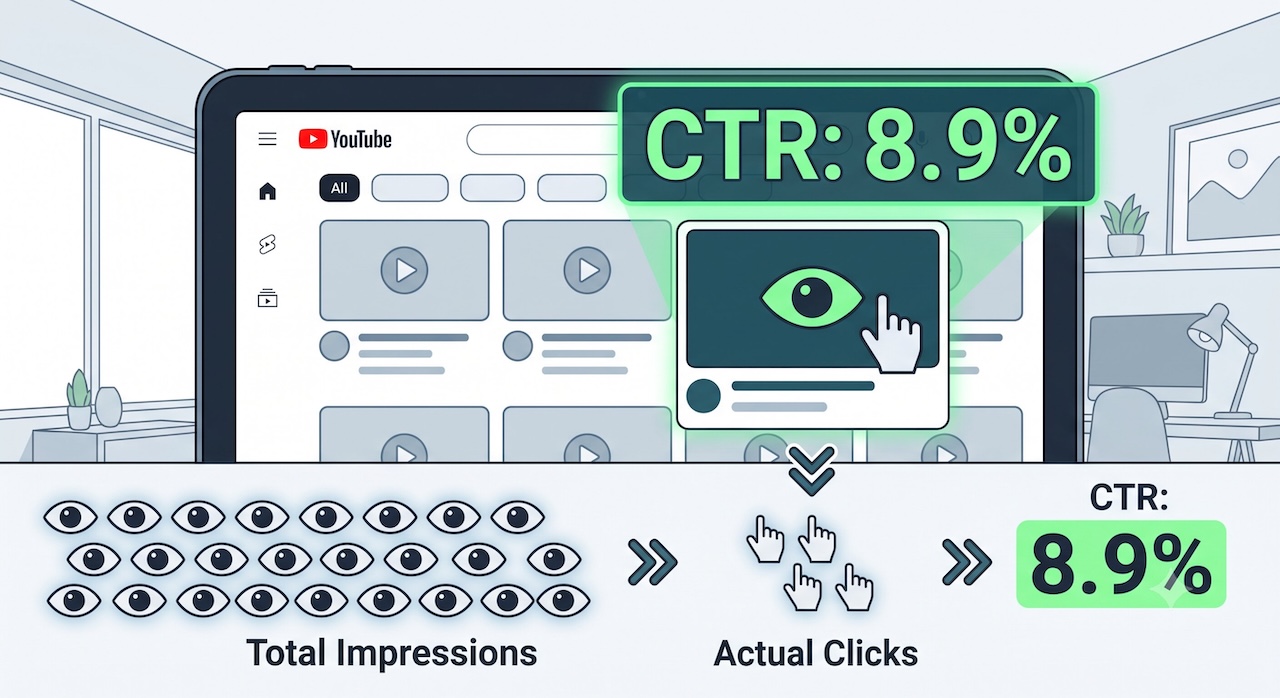 Understanding CTR: Testing how well your packaging converts scrollers into active viewers.
- Why it matters: It is the ultimate test of your packaging.
- The Action: If you have 100,000 impressions but a CTR of 0.5%, the YouTube algorithm is pushing your video, but your thumbnail or title is failing to convert interest into a click. You now have a clear directive: redesign the thumbnail or rewrite the title.
2. Average Percentage Viewed (APV) & Watch Time
Average Percentage Viewed tracks how much of a video was watched across your entire audience, while Watch Time calculates the total minutes spent consuming your content.
- Why it matters: These metrics prove whether your video actually delivered on the promise made by the title. The YouTube algorithm heavily favors videos with high watch times because they keep users on the platform longer, signaling high-quality, engaging content.
- The Action: If your 10-minute video has an APV of just 15%, viewers are abandoning ship almost immediately. This is an actionable signal to tighten your script, remove long-winded intros, and improve your pacing.
3. Audience Retention Graphs
This is the visual, second-by-second representation of your viewer drop-off over the duration of the video.
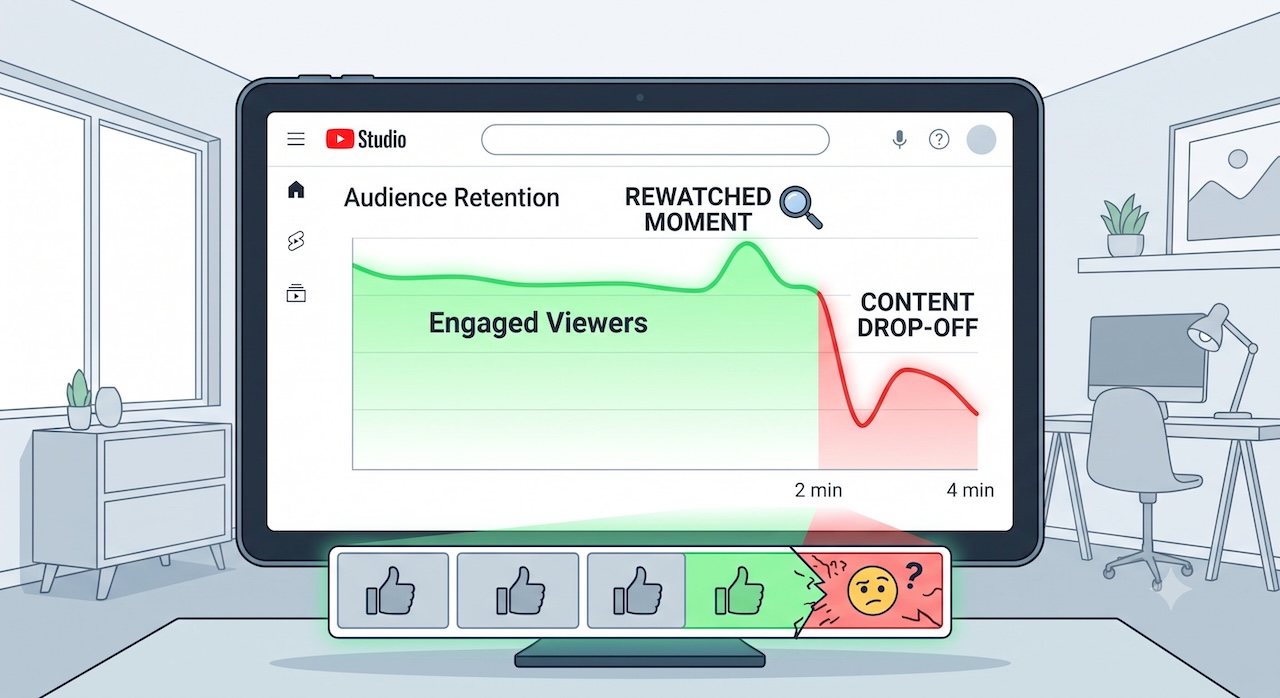 The Retention Graph: Removing the guesswork by seeing exactly where viewers lose interest.
- Why it matters: It removes the guesswork from editing by showing you exactly where people lose interest.
- The Action: Look for the sharp dips. Did a massive chunk of viewers leave at the 2:15 mark? Go watch what happened at 2:15. You probably went off-topic, asked for a subscription too early, or transitioned poorly. Note the mistake and never do it again.
4. Revenue and Conversion Data
If you use YouTube for business, your ultimate metrics are Revenue, Customer Acquisition Cost (CAC), and lead conversions.
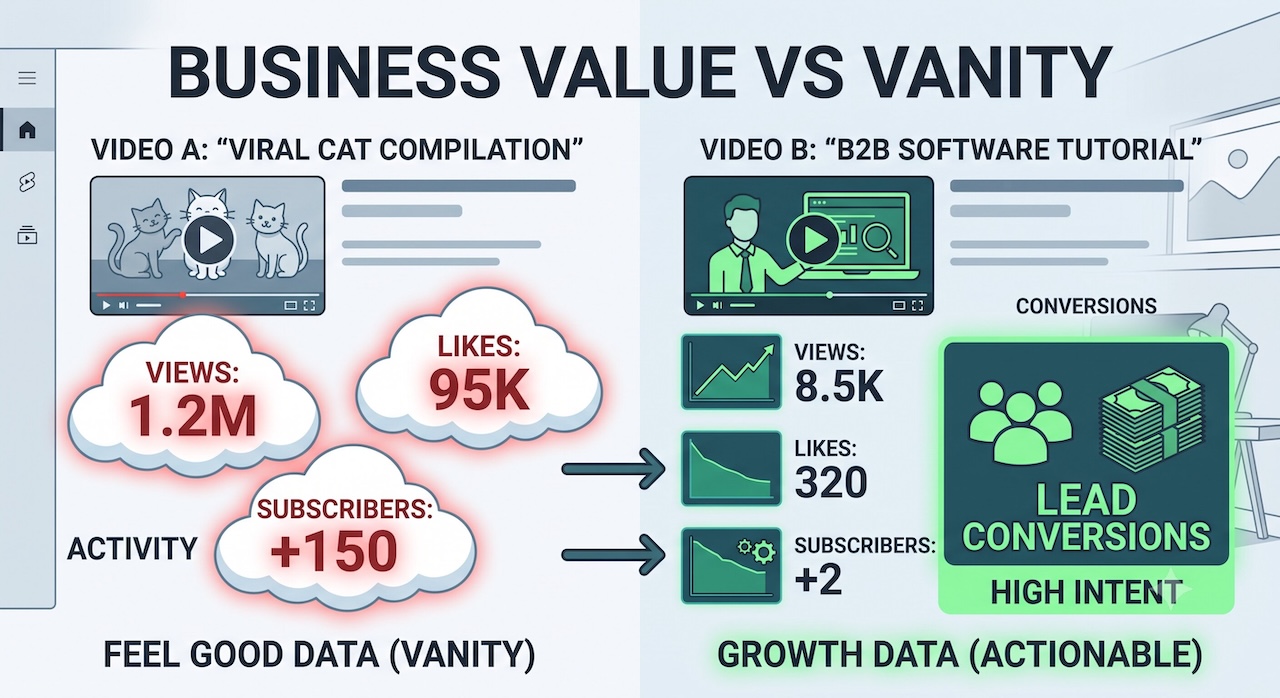 Business Value vs. Vanity: A side-by-side comparison.
- Why it matters: You need to know if the time and resources spent producing videos are yielding a positive return on investment, which CFOs and business leaders actually care about.
- The Action: Double down on the video formats that generate actual sales or booked meetings, even if their raw view counts are lower than your purely entertaining videos.
How to Pivot Your Analytics Strategy
Moving away from vanity metrics requires strict discipline. It is incredibly hard to ignore a stagnant subscriber count, but you must align your metrics with your actual goals.
Start by defining what true success looks like for your specific channel. If you are an educator, success might be high Average Percentage Viewed and an active comments section. If you are a B2B brand, success is website traffic, pipeline generation, and closed deals.
Next, integrate actionable metrics directly into your workflow. Instead of checking your views every hour, check your Audience Retention graph two days after a video goes live. Use that concrete data to script a tighter hook for your next upload.
Stop Chasing Ghosts
Vanity metrics will always be there to stroke your ego, but they will never build a loyal audience or a profitable business. By shifting your focus away from the superficial numbers and toward actionable insights like CTR, Watch Time, and retention, you stop guessing what works and start actively engineering your growth.

Why Kurzgesagt Gets So Many Returning Viewers
Kurzgesagt uploads just twice a month yet keeps 25.4M subscribers coming back for more. Here's the exact retention system behind it, backed by data — and how any creator can borrow it.
Read the post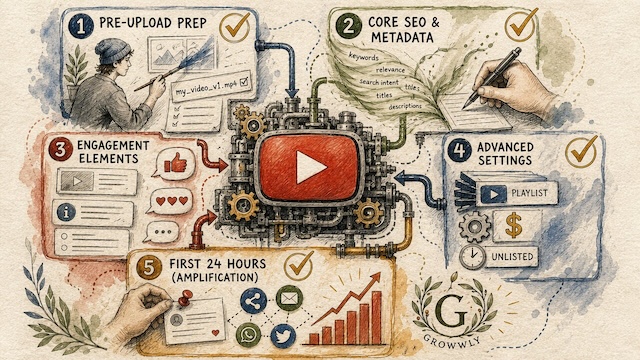
The Ultimate YouTube Publishing Checklist
Want your videos to rank higher? Discover the ultimate YouTube publishing checklist. Learn the exact SEO and upload steps to guarantee your content gets seen.
Read the post